
Walk through five plantation shutter showrooms in Melbourne and you’ll see the same material described five different ways. PVC. Polymer. Polyresin. Vinyl. Composite. Faux wood. Plus a handful of brand names – PolySatin, Fusion+, POLYLUX, Thermalite – that sound scientific but don’t tell you what you’re actually buying.
Here’s the untangled explanation of what’s what, so you can walk into any shutter showroom and know what the material actually is.
Why the naming is confusing
The core material used in most ‘PVC-style’ plantation shutters is polyvinyl chloride – PVC. That’s the industry’s technical term.
But different suppliers rebrand it because ‘PVC’ sounds cheap to some buyers. So the same core material becomes polymer plantation shutters, polyresin shutters, composite shutters, faux wood shutters, vinyl shutters, or a proprietary brand name (PolySatin, Fusion+, POLYLUX, Thermalite, etc.).
Some of these are legitimate technical distinctions. Most are marketing.
What PVC actually is
PVC (polyvinyl chloride) is a rigid plastic that’s been used in shutter manufacturing for 20+ years. Key properties: waterproof (won’t warp or swell in humidity), UV-stabilised (doesn’t yellow in normal indoor conditions), lightweight (easy to operate on large panels), cost-effective (cheaper than natural timber), and aluminium-reinforced (many premium PVC shutters have an aluminium core running through the load-bearing parts).
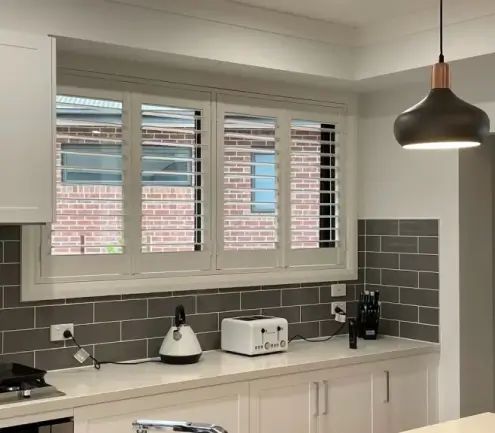
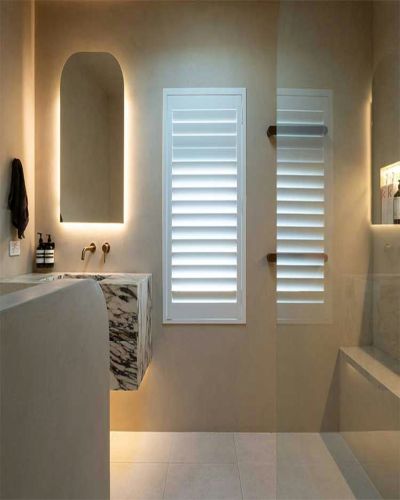
The result: shutters that suit bathrooms, laundries, kitchens, and any wet or humid room in the home. Not suitable for outdoor use – that’s aluminium’s job – but perfect for indoor wet-area installs.
Polymer and polyresin – are they the same as PVC?
For practical purposes: yes.
‘Polymer’ is a broader chemistry term meaning any large molecule made of repeating units. PVC is a polymer. So is polyester, polyurethane, and polyresin. When a shutter is marketed as ‘polymer plantation shutters’, it’s usually PVC. The manufacturer has chosen a friendlier name.
‘Polyresin’ is often a marketing term for a slightly modified PVC compound. It might have some minor additive differences, but the buyer isn’t paying for a materially different product. If a supplier can’t explain what’s in their polyresin that isn’t in standard PVC, treat them as equivalent.
The exception: some premium shutters use a specific engineered composite that’s genuinely different from standard PVC. But those are rare and usually cost significantly more. If you’re being sold ‘polyresin’ at PVC prices, it’s PVC with a new name.
Branded products explained (reference only)
You’ll see these product names in Melbourne showrooms. Here’s what they actually are.
PolySatin is Luxaflex’s proprietary polymer shutter, made by Hunter Douglas. Registered trademark. Marketed as a durable indoor shutter. Chemistry is a modified polyresin compound.
Fusion+ (or Fusion Plus) is Sunline Shutters’ polymer shutter range. Registered trademark. Similar to PVC in performance.
POLYLUX is DIYblinds.com.au’s polymer shutter product. Registered trademark.
Thermalite Shutters is Decor Blinds’ polymer/PVC shutter, marketed for thermal properties.
Woodlore is Nien Made’s composite shutter. Registered trademark. Genuinely different from PVC – it’s an engineered composite made from a wood-fibre-plus-polymer blend.
These are brand names, not generic material categories. If a competitor tries to sell you ‘PolySatin shutters’ without being a Luxaflex dealer, they can’t – that’s a registered mark. Same for the others.
The takeaway: when you’re comparing quotes, ask what the actual base material is. If the answer is ‘polymer’ or ‘polyresin’ without a clear explanation, it’s almost certainly PVC.
Where PVC and polymer shutters work best
PVC (and its polymer variants) is the right choice for bathrooms, ensuites, and powder rooms; laundries; kitchens (especially near the sink or splashback); any room with high humidity or moisture exposure; and cost-conscious installs where timber’s premium isn’t warranted.
PVC is not the right choice for outdoor patios, pergolas, verandahs, or balconies (use aluminium); rooms where you want the visible natural timber grain (use basswood); or extreme heat exposure (some PVC formulations can degrade at 60+ degrees Celsius, unusual for indoor Melbourne conditions but relevant for windows in direct all-day sun).
What to look for in a quality PVC shutter
Not all PVC is equal. When comparing quotes, ask: Is it aluminium-reinforced? Premium PVC shutters have an aluminium core in the load-bearing parts. Cheaper products are pure PVC and can flex or sag on large panels.
What’s the warranty? Reputable manufacturers offer 10-year material warranties. Anything shorter is a concern.
How thick is the material? Cheaper PVC uses thinner extrusions to save cost. The result is lighter, less rigid, and shorter-lived shutters.
What UV stabilisation is included? All PVC yellows over decades. UV stabilisers slow the process. Premium PVC formulations stay white or on-colour for 15 to 20+ years.
Ask these questions upfront. Anyone selling quality PVC shutters can answer them clearly.
Our PVC plantation shutter offering
We manufacture our own aluminium-reinforced PVC plantation shutters in Melbourne. 10-year warranty on the frame and blades. Multiple white and neutral shades. Custom-fit to your windows through our standard in-home measure process.
If you’re comparing PVC shutter quotes, ask us for a free in-home measure. We’ll walk through the material specs, the warranty, and the pricing so you can compare quotes with an equivalent baseline.