
Indoor vs Outdoor Shutters: What Works Where in a Melbourne Home?
The short version: indoor shutters are PVC or timber, built for light control and looks. Outdoor shutters are aluminium, built to take weather. They are not interchangeable, and the mistake that costs people money is putting an indoor shutter somewhere it gets wet.
- 300+ 5-Star Reviews
- 10-Year Structural Warranty
- Australian Made
- Free In-Home Measure & Quote
- 1000+ Shutters Installed
Indoor or Outdoor - Which Do You Actually Need?
- The window is inside the building envelope, behind glass
- You want precise light control and the view kept
- The room is a living space, bedroom or study
- It is a bathroom, kitchen or laundry, in which case PVC
- Appearance from inside the room is what matters most
- The opening is exposed to rain, wind or direct sun
- It is an alfresco, balcony, patio, carport or a west-facing pergola
- You want to close a space down in winter and open it up in summer
- Privacy from a neighbour or the street is the point
- You need something that will not warp, swell or fade outside
Indoor vs Outdoor Shutters Comparison
The Mistake That Costs People Twice
The call-outs we get on this are almost always the same job. Someone has put a timber or PVC shutter on the open side of an alfresco, or across a window that gets driven rain on a west-facing wall, and eighteen months later the panel has moved.
Timber swells. Not dramatically, and not straight away, but a basswood panel that takes repeated wetting and drying will move enough that the blades bind and the panel stops sitting square in the frame. Once that happens there is no adjustment that fixes it.
PVC does not swell, so people assume it is safe outside. It is not, for a different reason: constant direct UV chalks the surface and makes the panel brittle at the joints. Indoors, behind glass, that exposure is a fraction of what it is outside and PVC lasts two decades. On an unshaded west-facing alfresco in Melbourne it does not.
A deep, roofed verandah with a southern aspect gets very little direct sun and almost no driven rain. An indoor shutter there can last years.
The day someone encloses that verandah or the tree that was shading it comes down, the exposure changes and the shutter was never built for it.
Best Choice by Space
Timber for the warmth and the finish, PVC if the room gets afternoon sun through a large west-facing window and you want a material that will not fade.
PVC. Steam, splashes and regular cleaning are exactly what it is built for, and timber is not.
Aluminium. This is the space outdoor shutters exist for: close the exposed side down through winter, open it back up in summer.
Aluminium, and check the body corporate rules on external colour before you order. Powder-coat colour is usually the item they care about.
Aluminium, often fixed rather than operable, used as a screen.
Indoor, because the glass is doing the weatherproofing. PVC if it gets hot, timber if it is a genuine living space.
Light, Privacy and Airflow
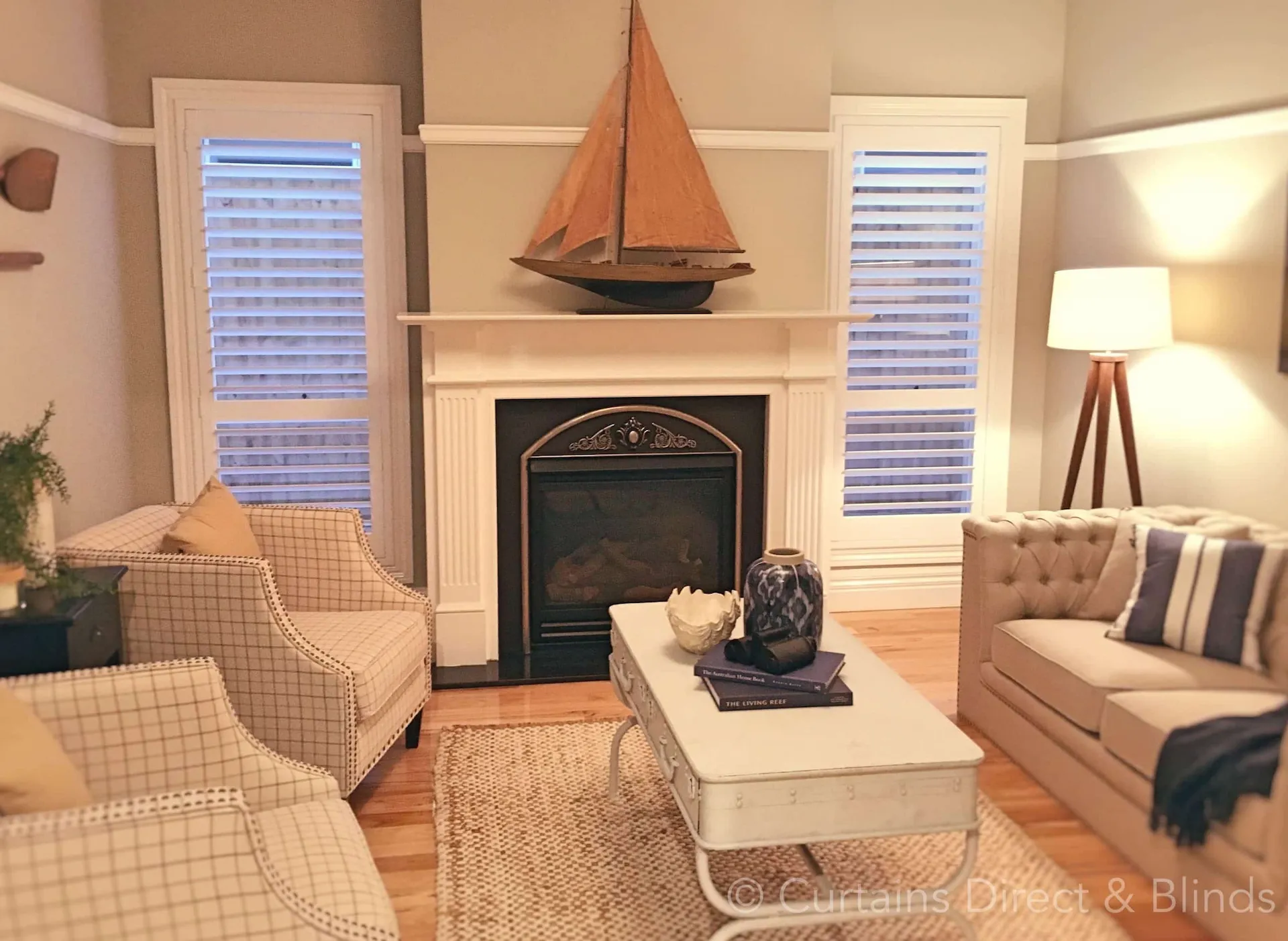
Indoor shutters are a light-control product first. Three positions rather than two: open, tilted for filtered light with the view intact, and closed for privacy without going dark. That middle position is what people notice, and it is the reason shutters beat blinds on a living room window.
Outdoor shutters do something different. They are a weather and privacy product that happens to control light. Tilted, they cut the sun before it reaches the glass, which is why an alfresco with aluminium shutters stays usable on a 35-degree afternoon when the same space with nothing on it does not. Closed, they turn an open side into a wall.
Airflow is the part people forget. An aluminium shutter tilted open still moves air through the space. A blind or a cafe blind closes the opening entirely. If the alfresco is where the barbecue lives, that difference matters more than the light does.


Weather and Melbourne Conditions
Melbourne is harder on an outdoor shutter than the temperature range suggests. It is not the heat that does the damage, it is the swing: a 34-degree afternoon followed by a cold change and rain inside the same day, repeated through summer. Materials that expand and contract at different rates loosen at the joints.
Aluminium handles that because it moves very little and the powder-coat is the only surface exposed. The two things worth specifying properly are the coating grade if you are near the bay, where salt shortens the life of a standard powder-coat, and the fixing, because an exposed alfresco panel takes wind load that an indoor panel never sees.
- Direct rain on the panel, which rules out timber immediately
- Hours of unshaded direct sun per day
- Distance from the bay, which drives the coating grade
- Wind exposure and the span of the opening
- Whether the space will stay open or get enclosed later
Maintenance Requirements
Outdoor shutters are the lower-maintenance product, which surprises people. There is no fabric, no cord and no mechanism, and the finish is built to be hosed.
- Wipe the blades with a damp cloth
- Gentle cleaning solution is safe on PVC
- Dry dusting for timber, keep it away from moisture
- No cords, chains or mechanisms to service
- Hose the panels down, more often near the bay
- Rinse salt off rather than letting it sit
- Check the fixings once a year on exposed openings
- Keep the tracks clear on sliding or bi-fold outdoor panels
Cost: Indoor vs Outdoor Shutters
Aluminium costs more per square metre than PVC and usually more than timber, and outdoor openings tend to be bigger, so an alfresco job is rarely a like-for-like comparison with a window. What drives the number is the span, the number of panels and whether the shutters are fixed or operable.
For real installed figures by window type, see our plantation shutters pricing guide. For a price on your own openings, book a free measure and quote. We measure indoor and outdoor on the same visit.
- Opening size and the number of panels
- Fixed panels compared with operable or sliding
- Powder-coat colour and coating grade
- Blade size
- Mount position and frame type
- Site access, particularly on a first-floor balcony
Warranty Considerations
Warranty on an outdoor shutter is written around exposure, which is why specifying the right product matters more than the length of the cover. An indoor shutter installed outside is not a warranty claim. It is a product used outside its rating, and no manufacturer covers that.
Aluminium outdoor shutters carry cover on the frame, the blades and the powder-coat finish, with the finish usually the shorter of the three and coastal exposure the condition most often qualified.
10-Year Structural Warranty
Indoor Shutters
Cover on Frame, Blades and Finish
Outdoor Aluminium
Which One Should You Choose?
- The opening sits behind glass, inside the building
- Light control and the look of the room are the priority
- The room is wet, in which case PVC
- You want a wide colour or stain range
- Rain or direct sun reaches the panel
- You want to close an alfresco or balcony down in winter
- Privacy from a neighbour or the street is the point
- The opening is wide and exposed
- PVC or timber on the windows
- Aluminium on the alfresco or balcony
- PVC in the bathroom, kitchen and laundry
- Both quoted on the same visit
See Indoor and Outdoor Shutters Side by Side
- Free measure and quote
- On-site advice on exposure and material
- Indoor and outdoor samples brought to you
- A recommendation per opening, with pricing for both
- Moorabbin: 1022 Nepean Hwy, Moorabbin VIC 3189
- Pascoe Vale South: 12 York Street, Pascoe Vale South VIC 3044
- See aluminium, PVC and timber side by side
- Bring rough measurements and photos of the space for an initial estimate
- Showroom visits by appointment only
Common Questions About Indoor and Outdoor Shutters
No, and this is the call-out we get most often. A timber panel that takes repeated wetting and drying will move enough that the blades bind and the panel stops sitting square, and once that happens no adjustment fixes it. Exposed openings are an aluminium job. Everything behind glass is an indoor decision between PVC and timber.
Powder-coated aluminium, and it is not close. It moves very little through Melbourne’s temperature swings, the only exposed surface is the coating, and it can be hosed down. The two things worth specifying properly are the coating grade if you are near the bay and the fixing, because an exposed alfresco panel takes wind load an indoor panel never sees.
PVC handles steam, splashes and regular cleaning, which is why it is what we put in bathrooms, kitchens and laundries. That is not the same as being rated for outside. Constant direct UV chalks the surface and makes the panel brittle at the joints, so PVC that lasts two decades behind glass will not last on an unshaded west-facing alfresco.
We would not specify it. Timber is built for dry rooms and large panels, and a bathroom gives it repeated moisture with nowhere to go. PVC does the same job in that room and takes the cleaning. If you want the timber look through the whole house, that is a conversation about the finish on the PVC, not about putting timber in the wet areas.
They cut the sun before it reaches the glass, which is the part that matters. An alfresco with aluminium shutters tilted stays usable on a 35-degree afternoon when the same space with nothing on it does not. Anything fitted on the inside of the glass is working after the heat is already in the room.
Yes. Closed, they turn an open side into a wall, which is the point of putting them on an alfresco or a balcony: you close the space down through winter and open it back up in summer. Tilted, they still move air through the space, which a cafe blind or a fabric screen does not.
The powder-coat is the only surface exposed and it is built for it. Coastal exposure is the condition that shortens its life, which is why coating grade is a specification question close to the bay rather than a detail. Rinse salt off rather than letting it sit, and check the fixings once a year on exposed openings.
Outdoor blades are wider, because they are built for span rather than for fine light control. Indoor blades come in 63mm, 89mm or 114mm and give you three positions: open, tilted with the view intact, and closed for privacy without going dark. That middle setting is the reason shutters beat blinds on a living room window.
On a house, usually not, though a heritage overlay changes that and is worth checking before you order. On an apartment balcony or terrace, check the body corporate rules first. Powder-coat colour is almost always the item they care about, so settle that before the order goes in rather than after.