
A bathroom isn’t the place to choose window coverings based on looks alone. It is one of the hardest rooms in the house on the materials inside it.
Hot showers create steam. Cold glass collects condensation. Humidity rises and falls repeatedly. If ventilation isn’t keeping up, that moisture hangs around even longer.
That makes choosing a plantation shutters bathroom solution a material decision first and a style decision second.
The blunt answer is that timber is the wrong choice for a bathroom. It might look beautiful when it’s new, but timber and repeated moisture exposure are a poor combination. A bathroom doesn’t need a window treatment that merely looks good on installation day. It needs one that can handle years of steam, condensation and daily use.
PVC is the sensible choice for bathroom shutters because it is designed to cope with moisture without behaving like natural timber.
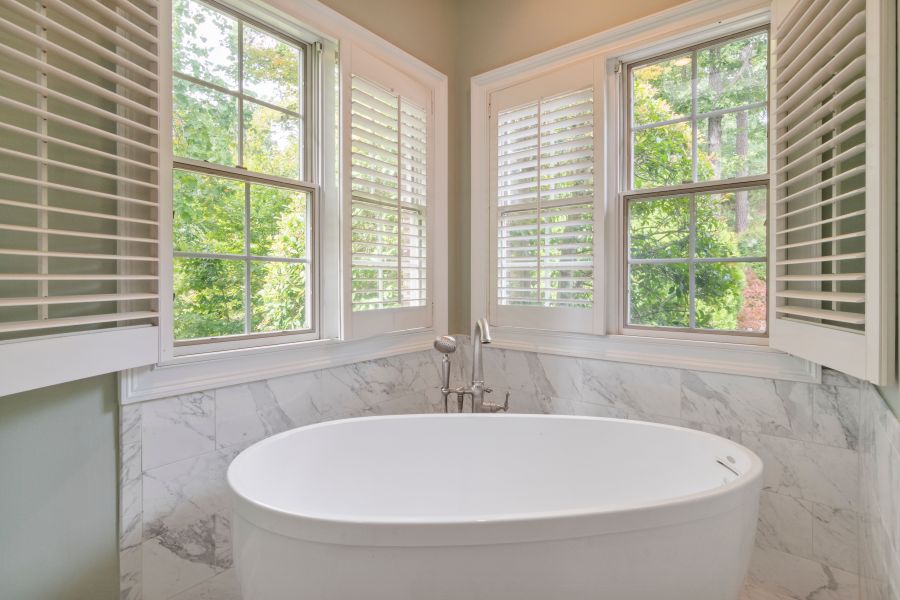
What Steam Does to a Timber Blade Over Two Winters
Timber works brilliantly in the right parts of a home. In a dry bedroom or living room, it brings warmth and texture that synthetic materials can’t quite replicate.
Put the same material in a bathroom and the conditions change completely.
The issue isn’t one shower. Timber isn’t going to fall apart because someone has a hot shower on a Sunday morning. The problem is repeated exposure over time.
Consider what happens during a Melbourne winter.
The bathroom can be cold first thing in the morning. The window is cold. Then someone runs a hot shower, and the temperature and humidity in the room rise quickly. Steam reaches the window, condensation forms, and moisture settles around the frame and shutter.
After the shower, the room gradually dries out.
The next morning, it happens again.
And again.
Timber naturally responds to changes in moisture. It absorbs and releases moisture as humidity changes, which means the material can move over time. A good finish helps protect the timber, but it doesn’t change its basic behaviour.
After one winter, you may not see anything concerning. The blades still look good. The finish is intact. Everything opens and closes normally.
After two winters, the repeated cycle has had considerably more opportunity to affect the material.
Movement can lead to changes in fit and alignment. Edges and joints can become more vulnerable to moisture. The finish can deteriorate more quickly in areas that repeatedly encounter condensation or dampness.
And bathrooms aren’t particularly forgiving when it comes to moisture.
If a shutter is installed near a shower or bath, it can also encounter occasional splashes, not just airborne steam.
This is why choosing timber for a bathroom because it looks better is the wrong calculation. You’re choosing a material based on appearance while asking it to perform in an environment it doesn’t suit.
If you want timber shutters, put them somewhere dry.
For the bathroom, don’t.
Why PVC Holds Its Shape in a Wet Room
PVC is the better material for a wet room because it doesn’t absorb moisture in the same way natural timber does.
That’s important when the shutter has moving blades, hinges, frames and other components that all need to remain properly aligned.
A bathroom shutter gets used every day. You open it for daylight. You tilt the blades for privacy. You close it at night. The panels need to move without sticking or rubbing against the frame.
The material needs to cope with the environment while continuing to do its job.
PVC is much better suited to that combination of moisture and repeated use.
That doesn’t mean you can ignore condensation or ventilation. A poorly ventilated bathroom can create excessive moisture regardless of the window covering. You still need an exhaust fan or suitable ventilation, and it’s sensible to allow the room to dry after showers.
But there’s a big difference between managing moisture in a room and deliberately putting a moisture-sensitive material in that room.
For homeowners looking at bathroom shutters, PVC shutters are the practical option.
They give you the plantation-shutter appearance without making timber’s moisture sensitivity part of the equation.
That’s particularly useful if you’re renovating and want the same general shutter style throughout the house. The material doesn’t have to be identical in every room. Dry rooms can have one specification, while wet areas get the material that actually suits them.
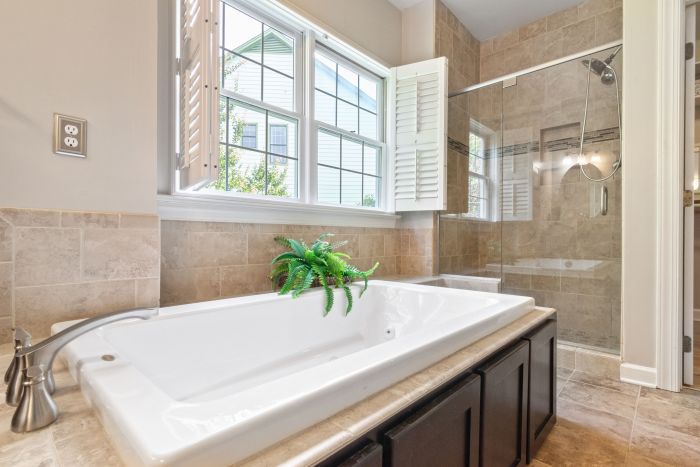
Laundries, Ensuites and Windows Above a Bath
Bathrooms aren’t the only rooms where moisture should influence your choice.
A laundry can be a humid environment, particularly when wet clothes, washing machines and dryers are all contributing to moisture in the room.
An ensuite can have the same issue. In fact, the smaller size of many ensuites can mean humidity builds quickly during a shower.
Then there are windows positioned above or beside a bath.
These windows deserve particular attention because they can experience more than airborne steam. Depending on the layout, splashing can reach the window or shutter, while condensation can settle on the glass and surrounding surfaces.
This is where the material choice becomes very straightforward.
You don’t need to overthink whether a timber shutter might work if you’re careful enough. The question is whether timber is the sensible material for repeated exposure to these conditions.
It isn’t.
PVC is.
The same thinking applies when you’re comparing indoor shutters for different rooms. “Indoor” doesn’t mean every indoor environment is the same. A bedroom, kitchen, laundry and bathroom can have completely different levels of moisture and humidity.
If you’re fitting shutters throughout a Melbourne home, assess each room according to how it is actually used.
A bathroom should be treated as a wet area.
A laundry should be considered a potentially humid area.
A bedroom is a much more forgiving environment.
Matching the material to the room is more important than forcing every window to use exactly the same specification.
Privacy Without Losing the Light
Bathroom windows create an obvious problem.
You want natural light, but you also want privacy.
Closing the window completely gives you privacy but can make the room darker than it needs to be. Leaving it uncovered gives you light but may leave the room exposed to neighbours, pedestrians or nearby homes.
Shutters give you control over both.
The blades can be tilted to restrict the view while still allowing daylight into the room. You can adjust the angle depending on the time of day and how much privacy you need.
That makes bathroom shutters particularly useful for windows facing neighbouring properties.
During the day, you can leave the blades angled to bring in light without creating a clear view into the bathroom. At night, you can close them further.
You don’t have to choose between a bright bathroom and a private one.
The blade configuration can also help control glare. If the window receives strong afternoon sun, adjusting the blades can reduce direct light without turning the room completely dark.
This is one of the practical reasons plantation shutters work so well as internal window shutters. They’re not simply something covering the glass. They let you control what comes through the window and what can be seen from outside.
And because they’re fitted to the window, they can provide a more permanent, structured appearance than many temporary window coverings.
Just remember that the privacy benefit doesn’t change the material decision.
A beautifully designed shutter still needs to be made from a material suitable for the bathroom.
What to Look for in the Frame and the Fixings
Choosing PVC blades is the obvious starting point, but don’t stop there.
The frame and hardware need to be considered too.
A bathroom can be humid for long periods, so the components holding the shutter together need to be appropriate for those conditions.
Start with the frame.
It needs to be properly measured and fitted to the window opening. If the frame is poorly positioned, it can interfere with the window, handles or surrounding trim.
Check the hardware as well.
Hinges, screws and other fixings should be suitable for the environment. Ask what hardware is being used and whether it’s appropriate for a humid or wet area.
This is especially important around windows close to showers and baths. The closer the shutter is to a direct source of water, the more carefully the installation needs to be considered.
The frame profile matters too.
The installer needs to assess the available reveal, the surrounding architrave and the position of the window hardware. A shutter shouldn’t be forced into an opening simply because the dimensions appear to work on paper.
Clearance matters.
The panels need enough room to open. The blades need to tilt without hitting handles or other fittings. The frame needs to sit securely without creating unnecessary problems around the window.
A professional measure can identify these issues before the shutters are manufactured.
That’s important because a custom-made shutter isn’t something you want to discover is unsuitable after it arrives.
The same applies to cleaning and general care. PVC is practical for wet areas, but it still needs sensible maintenance. Don’t flood the frame with water, don’t allow moisture to sit unnecessarily around the hardware, and keep the bathroom properly ventilated.
The goal is simple: choose materials that suit the room, install them correctly and don’t create avoidable moisture problems.
For a bathroom, that starts with PVC.
Timber might win the style argument in a showroom. PVC wins the bathroom argument because it is better suited to the conditions.
And in a wet room, performance should come first.