
Search for what plantation shutters cost in Melbourne and you will be told somewhere between $200 and $600 per square metre. That figure is not wrong so much as it is answering a different question. It is scraped off DIY and flat-pack suppliers, and it covers a panel arriving in a box. It does not include freight, it does not include installation, and it does not include the risk of measuring your own windows, which is where most of those jobs actually go wrong.
An installed job and a flat-packed one are not the same product at the same price. So here are real numbers, by window type, for shutters supplied and installed in Melbourne homes in 2026.
What Plantation Shutters Cost, by Window Type
These are installed ranges. Supply, measure and installation, not a panel in a box.
| Window type | Installed range |
|---|---|
| Small toilet window | $300 to $500 |
| Two-glass bathroom window | $500 to $800 |
| Standard bedroom window, 2.7m ceiling | about $1,200 to $1,500 |
| Large living room window | about $1,000 to $1,500 |
| Standard two-glass sliding door, bi-fold or sliding shutters | from $1,800 |
| Modern full house, eight to ten windows | about $5,000 to $8,000 |
Two notes on reading that table.
The bedroom window costs more than the large living room window, which looks wrong until you see why. It is the 2.7 metre ceiling. Height drives panel count and hardware, and a tall narrow window can carry more of both than a wide one at standard height.
The sliding door row is the only one written as a starting figure rather than a range, because door openings do not have a ceiling. A standard two-glass slider starts at $1,800. A four-panel stacker across a whole wall is a different conversation and it gets priced at the measure.
The Three Things That Move the Price
Gerry, who has been quoting these jobs in Melbourne for years, names three. Not four, not seven. Three.
Custom shapes. An arched head, a raked stairwell window, a curved bay. A shaped panel is engineered rather than cut to size, and that is where the top of a range comes from.
Mount position. Whether the shutter sits inside the window recess or fixes to the wall over it. A face-fixed frame uses more material than a recess frame, so it costs a little more per window, and across a whole house that adds up. It is also not always a choice: a lot of Melbourne housing has reveals too shallow to take a recess frame at all. Which way your windows are mounted is worth understanding before you compare two quotes.
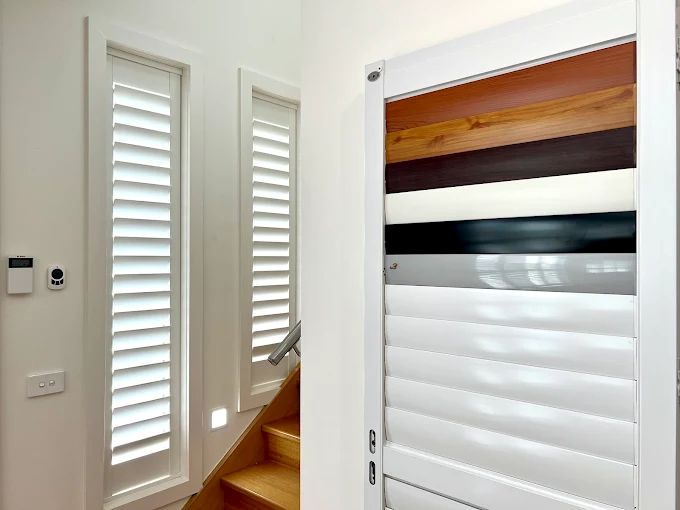
Colour options. A standard white finish sits at the bottom of the range. Stains and specified colours sit above it.
Nothing else moves the number as much as those three do. Window count matters less than people assume. Window type matters far more.
Why the Per Square Metre Figure Is Misleading
Square metre pricing works for carpet. It does not work for shutters, and here is the specific reason.
The cost of a shutter is carried by the frame, the hardware and the number of panels, not by the area of the opening. Two windows of identical area can differ by hundreds of dollars because one is a single clean rectangle and the other is split into three panels with a winder in the way. A per square metre rate averages that away, which is precisely why it is the figure a DIY supplier likes: it makes a hard window look the same price as an easy one right up until the panel arrives and does not fit.
It also excludes the two costs that matter most on an installed job. Freight, and the measure itself. A shutter panel is made to a fixed size and does not stretch. Measure a few millimetres over and it will not go in. Measure a few millimetres under and you get a light gap down one side you will look at every day. There is no adjustment at the end that fixes a number recorded wrongly at the start, which is why plantation shutters installation and measuring are quoted as one job here rather than as an optional extra.
What Should Be in the Quote
A written quote should break out materials and installation and show you both. If it does not, you are being asked to compare a number against a number that means something different. Consumer Affairs Victoria makes the same point about any home improvement work: get it in writing, with the scope set out, before anything is ordered.
Things worth checking are in the quote rather than assumed:
- Measure and installation included, with no separate fitting charge appearing later
- Material specified per room, not across the house
- Frame type and mount position stated per window
- Blade size stated
- Removal and disposal of existing blinds or curtains
- The warranty and what it covers
Where Shutters Are and Are Not Worth the Money
Shutters cost more per window than blinds. On the windows people see and sit next to, that is money well spent: a shutter is a fixture that stays with the house and still looks right in fifteen years, while a blind is usually replaced by the next owner. On a laundry window or a skylight, the gap buys you very little, and how they compare with blinds is worth reading before you commit the whole budget one way.
The common mistake is spreading a budget thin across every window in the house. If it stretches to six windows in shutters or the whole house in blinds, the better move is usually to stage it: the front rooms and the main living windows now, the back of the house later.
Getting a Real Number for Your House
None of the figures above are your price. They are the bands that Melbourne jobs land in, which is useful for working out whether you are in the right conversation and useless for signing anything.
A free in-home measure gives you the actual number, window by window, with the frame and material decided at each opening rather than applied across the house. It takes about an hour and it is the only point at which a quote means anything.
Book a free measure and quote, or visit one of our showrooms by appointment.