
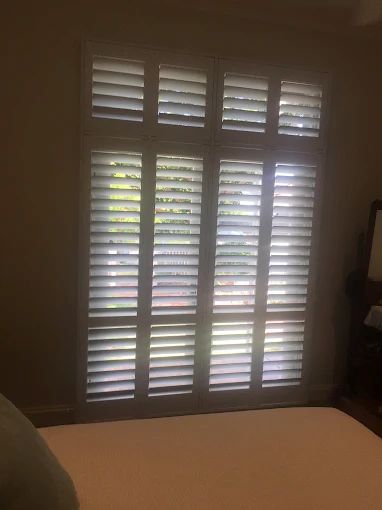
Plantation shutters give you beautiful, adjustable light control. What they don’t give you – on their own – is total darkness.
If you’re a shift worker sleeping during the day, a parent trying to keep a nursery pitch-black at 6pm, or anyone who needs blackout for quality sleep, you’ve probably noticed. The louvres and frame gaps let a small amount of light through. It’s a ‘halo’ or a ‘seepage’ around the edges. For most rooms, that’s fine. For a bedroom that needs to feel like night at 2pm, it’s a problem.
Here’s the solution that keeps the shutter aesthetic without compromising the sleep environment.
Why plantation shutters alone don’t achieve blackout
Plantation shutters are built with adjustable louvres. Even when the louvres are fully closed, there are small gaps between them and around the frame. This is by design – the shutter needs to move, which means it can’t be a sealed panel.
The result: a plantation shutter closed against direct daylight will still let in maybe 5 to 10% of the light. Enough that a shift worker won’t get restful sleep. Enough that a baby monitor camera picks up the room detail. Enough to disturb someone with sensitive sleep.
For 95% of use cases, that’s fine. Light control isn’t the same as blackout, and shutters do light control brilliantly.
For the 5% of use cases that need genuine blackout, you need a second layer.
The shutter + blackout blind combo
The double-up method installs a dedicated blackout roller blind directly behind the plantation shutter. Same window frame, different mounting position, both operate independently.
During the day: shutters are the visible face of the window. The blind is rolled up and hidden behind them. The room looks like it has beautiful plantation shutters – because it does.
When total darkness is needed: pull the blackout blind down behind the shutter. Now you have a sealed light barrier and a beautiful shutter still framing the window. Complete blackout, no aesthetic compromise.
Who benefits most
Shift workers – nurses, paramedics, air traffic controllers, hospitality – anyone sleeping during the day. A shutter alone won’t cut it. A shutter + blackout blind combo gives them a proper sleep environment during daylight hours.
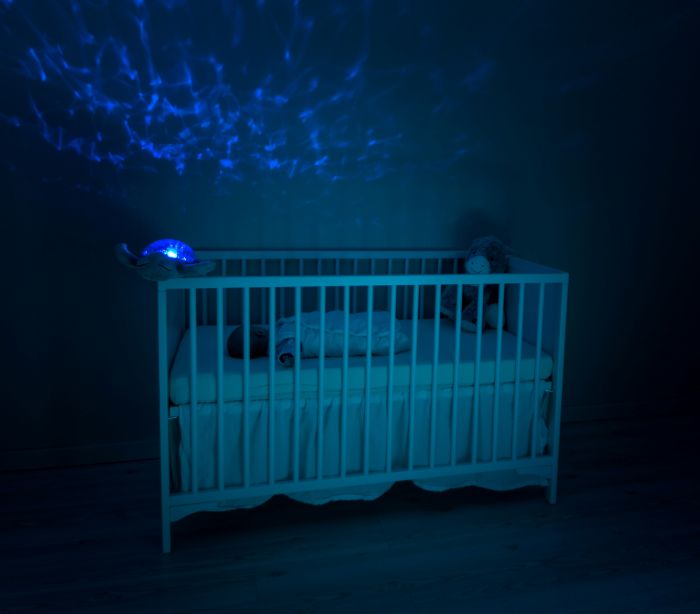
Parents of young children. Nurseries and kids’ rooms are the classic use case. Naps in bright afternoons need real darkness. The combo lets the room look beautiful during the day and go pitch-black for a nap.
People with light-sensitive sleep. Some adults simply don’t sleep well with any ambient light. Migraine sufferers, insomniacs, people on shift medication – total darkness makes a measurable difference.
Home cinema rooms. Any room used for daytime viewing benefits.
Aesthetic integrity – both work together
The reason clients choose this combo over just installing blackout blinds alone: they want the plantation shutter look.
Plantation shutters are architectural. They frame the window, add character, and integrate with the home. Blackout blinds alone are functional but usually look flat and rental-grade.
The combo gives both: the shutter is what the room sees. The blind is invisible until it’s needed. When it’s not needed, it’s rolled up and out of sight. When it is needed, it drops down behind the shutter without changing the room’s visible look.
Bonus benefits: thermal insulation and sound dampening
The two-layer system adds practical benefits beyond blackout.
Thermal insulation: two barriers between the outdoor air and the room mean less heat transfer. Bedrooms stay cooler on 38-degree Melbourne summer days and warmer through winter mornings.
Sound dampening: two independent layers reduce external noise. Not silence, but a measurable reduction – enough that traffic-facing windows on main roads feel quieter.
These aren’t the reasons to install the combo, but they’re welcome side effects.
Planning a blackout install
The shutter + blackout blind combo is planned at the initial measure stage. Once shutters are installed, retrofitting a blind behind them is more complex.
At the measure: discuss which rooms need blackout (usually 1 to 3 rooms per home), confirm the mounting depth of the window (you need enough recess for both the shutter and the blind hardware), choose the blind fabric (blackout options in white, cream, grey – matched to the room), and choose the operation (spring, chain, motorised).
The combo adds cost – typically $250 to $500 per window for the blind on top of the shutter cost. But it’s a one-time investment for a permanent solution.
Getting a consultation
If you’re building or renovating a home and know one of the rooms will need blackout, mention it at the initial in-home measure. We’ll walk through the shutter + blackout blind combo, show you samples, and quote both together.